Wednesday, January 13, 2016

Lucky Bamboo


According to Oriental Folklore, bamboo plants were given to loved ones and friends during times of
celebration.  This Dracaena plant has found its way around our modern world as a method of enhancing the Fung Shui, or the flow of energy!  These canes will grow indoors with little care, requiring only moderate light and watering.

Wednesday, January 6, 2016

Tropical Air Plants


These tropical "air plants" (epiphytes) are in the Bromeliad family, genus Tillandsia.  They are first cousin to Spanish Moss; in their native habitat they live in the treetops, often among ferns and orchids.  Good air circulation and bright filtered light are essential to their environment.  Their food comes from dead leaves, bark and insect droppings that fall into the rainwater stored in the center "cup" of the plant.  As it all decays, the nutrients are absorbed by the leaves; the roots are used only for clinging to the bark.

Tuesday, December 22, 2015


The Birding Place!
 
Our new bird area is filled with everything you need to keep your feathered friends happy and content this winter.  

* 12 different kinds of bird seed 

* Squirrel corn
* 4 flavors of suet cakes
* Ashcombe's own mixed bird seed blend

* Small and large quantities of mixed seed and black oil sunflower seed

SPECIALS...
* Black oil sunflower seed - 50lb. bag for $22.00 (reg. $24.99)
* A Case of Suet (12-pack of suet cakes) $13.99 (reg. $17.99)

Wednesday, December 16, 2015

Planting A Fairy Garden


Fairy gardening is a popular past time for many children, youth and adults.  It is a great way to create a beautiful, creative masterpiece that is limited only by your imagination!

A sure way to attract fairies into your garden is to create a magical miniature fairy garden.  Fairies are peaceful, yet mischievous magical folks that like to frolic and dance in the garden.

To design and plant a garden for fairies, begin by thinking small.  You'll need a small container like a terrarium, box or basket; a selection of small plants that fairies like; and small ornaments and treasures to tempt and please the fairies.

Wednesday, December 2, 2015

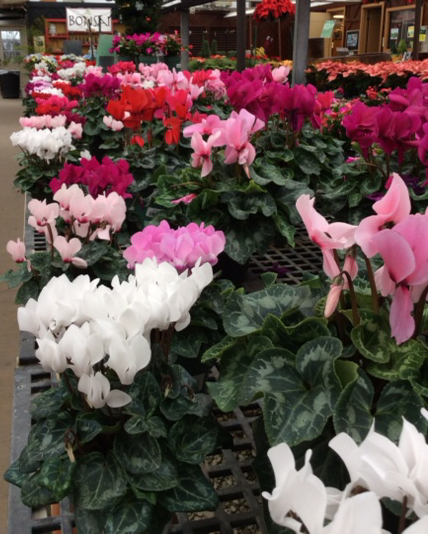
Cyclamen


Cyclamen is a lovely flowering plant appreciated for its habit of blooming in winter when flowers are so scarce.  The plant develops from an underground corm, or tuber, similar to a bulb.  The leaves are generally deep green with pale green markings, which nicely set off the pink, white or red blooms.  Even when not in flower, the foliage, with its mottled markings, is interesting.

Tuesday, November 24, 2015

Gardens Of London Presentation


Gardens Of London Presentation
Saturday, December 5th, 10:00am

Why are English gardens so numerous and  what makes them so special? Master Gardener Wendy Plowman, who visited many of them, will share with you the ins and outs of these gardens in her "Gardens of London" presentation.  Sit back, relax, and enjoy a cup of English Breakfast tea and scones during the show.  
Pre-registration and payment required.  $10.00

Wednesday, November 18, 2015

Christmas Cactus


The unusual stems and timely blossoms of these commonly grown house plants are both delightful and fascinating.  Christmas cactus is an old favorite.  It has striking, bright green arched branches made up of flat, scalloped 11/2 inch long joints.  The branches droop, especially when in bloom.  It's multi-trumpeted, 3-inch long, rosy red flowers, plus other colors, appear at Christmas time.


Click here to learn more about the popular Christmas Cactus

Tuesday, November 3, 2015

Growing African Violets


African Violets are beautiful little plants that can be grown indoors all year long.  They are great for small spaces, window sills or any sunny, bright room of the house.  They are easy to grow with a little bit of tender love and care!


Wednesday, October 28, 2015

Terrariums


Terrariums

Terrariums can be a fun, indoor project for kids and adults.  Let your imagination run wild and develop a miniature world to enjoy throughout the winter months.  Ashcombe offers a great selection of small, terrarium- sized plants and many accessories to customize it exactly the way you want!

Wednesday, October 21, 2015

Put Color In Your Fall Garden


We have a fantastic selection of cabbage, kale and pansies still available.  They will thrive in your garden until a hard freeze or the first snowfall!

Wednesday, October 14, 2015

Christmas Is Coming!!


Christmas Is Coming!
 
Can you believe Christmas is just around the corner?  It's hard to believe, but here at Ashcombe, we are working hard to get our poinsettias beautiful for your holiday enjoyment.  This picture shows one of our larger greenhouses filled with green poinsettias.  Our growers are busy taking care of them and tending to their every need.  Soon, color will begin to appear on their leaves!

Wednesday, October 7, 2015

Pumpkin & Squash Recipes


Some of the best tastes of the season are created with the squash and pumpkin varieties that are found this time of the year.  Try some of these family favorites for your next 
get-together!


Wednesday, September 30, 2015

2015 Fall Harvest Days


Great Family Fun!
October 2, 3, 4, 9, 10, 11, 12, 16, 17 - 25, 30 & 31  
(weather permitting - please call ahead)
Hours:  Monday - Saturday
9am-6pm // Sunday 11am-4pm

SPECIAL EVENTS THIS WEEKEND
Farm Animals
Hay Slides & Jumps
Corn Box, Tunnels and Field Games
Pick-Your-Own Pumpkins
Horse Drawn Hayrides
Corn Maze
Kettle Corn
Face Painting
Ticket Prices:
Hayride:  $4.00   /Hayworld:  $4.00
Combo Ticket Hayworld/1 Hayride:  $7.00
Season Pass to Hayworld plus 1 Hayride Ticket:  $20.00
Children under 1 FREE
Call for group rates

Wednesday, September 23, 2015

Pumpkins!


Pick-Your-Own Pumpkins
 
It's that time of year.  Can you guess what the favorite symbol of the season is?  It's orange, and round, and sometimes smiles...a Jack-O-Lantern pumpkin of course!  

We have a great selection of these beauties in all sizes, shapes and colors!  Choose from our large display beside the main entrance, or pick your own in our Fall Harvest fun area (during Fall Harvest hours).  

Tuesday, September 15, 2015

Using Winter Squash


Have you ever wondered what to do with all those colorful, weirdly shaped squash you see in the fall?   They are rich in vitamins and quite healthy, so you just might want to give them a chance!  Most of them are easy to prepare for mealtime.


Toasted Squash Seeds (any winter squash) - Rinse seeds thoroughly in a strainer.  Place on paper towels and dry.  Remove fibers from seeds.  Rinse seeds again and spread evenly (without drying) on a cookie sheet.  Sprinkle with salt or garlic salt.  Bake in a 350°F oven for 15-20 minutes.

Squash can be baked, boiled or sliced and fried; mashed and buttered or mixed with other 
ingredients to create breads, cakes, pies, desserts, casseroles, soups and salads.  

Acorn Squash can be green, orange or buff in color.  They are shaped somewhat like a huge acorn with ribs or ridges.  The orange flesh is sweet and  is excellent for baking.  It is an early producer and can be stored well.

Banana Squash are long and pointed and grayish or creamy in color.  Some grow to over 2 feet long!  This squash has excellent flavor and keeping quality.

Buttercup Squash usually have flat green tops and a dark green body with stripes.  They are drum or turban shaped  The flesh is thick and orange and has a rich aromatic flavor.  Excellent for pies.

Butternut Squash have an elongated bell-shape and are buff-colored with smooth skin.  They are sweet and tender and excellent for baking.

Cushaw is a pear shaped squash that ranges from a striped green to orange color.  The flesh is golden and a good quality for baking.  It is used commercially for canned pumpkin and makes 
excellent pies.

Hubbard Squash grows quite large and thick and is cylindrical in shape.  Its color ranges from bluish to gray to orange.  The flesh is pale yellow and of good quality for baking.

Spaghetti Squash has smooth skin and is orange to pale yellow in color.  It has yellowish strands inside and a good crunchy texture.  This squash can be prepared and eaten like spaghetti noodles, with sauce and all.  Bake or boil to fork out the center like strands of pasta.

Sweet Dumpling as round as dumplings and as sweet as honey!   The golden flesh bakes up tender.  Hard ivory and green striped skin - an ideal keeper.

Turban - The most popular variety of this squash is called the ‘Turk’s Turban’.  It grows to about a foot in diameter and is crown-like.  It is not the best eating quality, fine-grained and somewhat like a sweet potato.

Wednesday, September 9, 2015

How Often Perennials Require Division


Some perennials need division frequently, while others do better left undisturbed.  The following list illustrates how often to divide many common perennials.  These recommendations assume suitable growing conditions and overall healthy plants.  The time frames given for division are those required to maintain plant health.  Some of the plants on this list can be invasive under certain conditions and many need division more frequently than indicated if their size must be limited.     

Divide These Every 1-3 Years
Achillea (Yarrow)
Aegopodium podagraria ‘Variegatum’ (Snow on the Mountain)
Arabis caucasica (Rock Cress)
Artemisia ludoviciana (Wormwood)
Aster Novi-belgii (New York Aster) 
Campanula carpatic (Carpathian Harebell) 
Campanula persicifolia (Peach Leaved Bellflower) 
Centaurea montana (Bachelor’s Button) 
Centranthus ruber (Jupiter’s Beard) 
Cerastium tomentosum (Snow in Summer)
Coreopsis grandifolia (Tickseed) 
Coreopsis verticillata (Threadleaf Tickseed)
Delphinium elatum (Delphinium)
Dendranthema morifolium (Chrysanthemum)
Dianthus deltoids (Maiden Pinks)
Gaillardia grandiflora (Blanket Flower)
Geum (Avens)
Helenium autumnale (Helen’s Flower)
Heuchera micrantha (Purple-leaved Coral Bells)
Heuchera sanguinea (Coral Bells)
Iris germanica (Bearded Iris)
Leucanthemum superbum (Shasta Daisy)
Lychnis coronaria (Rose Campion)
Monarda didyma (Beebalm)
Penstemon barbatus (Beard Tongue)
Phlox paniculata (Garden)
Phlox subulata (Creeping) 
Physostegia virginiana (Obedient Plant)
Veronica spicata (Spiked Speedwell)

Divide These Every 4-5 Years
Acanthus hungaricus (Bear’s Breeches)
Armeria maritima (Sea Thrift)
Astrantia lactiflora (Mugwort)
Asteromoea mongolica (Kalimeris) 
Astrantia major (Masterwort)
Astilbe (Astilbe)
Bergenia cordifolia (Bergenia)
Boltonia asteroids (Boltonia)
Campanula glomerata (Clustered Bellflower)
Campanula rotundifolia (Harebell)
Cerstostigma plumbaginoides (Plumbago) 
Chelone lyonii (Turtlehead)
Chrysogonum virginianum (Golden Star)
Dianthus gratianopolitanus (Cheddar Pinks)
Dicentra eximia (Fringed Bleeding Heart)
Digitalis grandiflora (Perennial Foxglove)
Erigeron (Fleabane)
Eupatorium maculatum (Joe-Pye Weed)
Helianthus (Perennial Sunflower)
Heliopsis helianthoides (False Sunflower)
Hemerocalllis (Daylily)
Liatris spicata (Gayfeather)
Rudbeckia fulgida ‘Goldsturm’ (Black Eyed Susan)
Rudbeckia nitida ‘Herbstonne’ (Shining Coneflower) 
Scabiosa (Pincushion Flower)
Solidago (Goldenrod)
Stachys byzantina (Lamb’s Ear)
Stokesia laevis (Stokes Aster)
Tiarella cordifolia (Foamflower)
Tradescantia andersoniana (Spiderwort)
Veronicastrum virginicum (Culver’s Root)

Divide every 6-10 years
* = resents disturbance
^ = tough woody roots or taproot

Alchimelia mollis (Lady’s Mantle)
Amsonia tabernaemontana * (Blue Star)
Asarum europaeum (European Ginger)
Begonia grandis (Perennial Begonia)
Brunnera macrophylla (Perennial Forget-Me-Not)
Echinacea purpurea (Purple Conflower)
Echinops ritro *^ (Globe Thistle)
Epimedium * (Barrenwort)
Filipendula rubra ‘Venusta’ ^ (Queen of the Prairie)
Filipendula ulmaria ^ (Meadowsweet)
Geranium (Cranesbill)
Hemerocallis (Daylily) 
Hosta (Hosta)
Iberis sempervirens * (Candytuft)
Iris siberica (Siberian Iris)
Kniphofia (Red Hot Poker)
Ligularia (Ligularia)
Limonium latifolium * (Sea Lavender Statice)
Nepeta (Catmint)
Papaver orientale * (Oriental Poppy)
Polygonatum odoratum ‘Variegatum’ (Variegated Solomon’s Seal)
Pulmonaria (Lungwort)
Rodgersia aesculifolia (Rodger’s Flower)
Salvia nemerosa (Meadow Sage)
Sedum spectabile (Stonecrop)
Thalictrum aquilegifolium (Meadowrue)
Tricyrtis hirta (Toadlily)
Trollis * (Globeflower)
Ornamental Grasses (variety)

Divide every 10 + years
* = resents disturbance
^ = tough woody roots or taproot

Aconitum * (Monkshood)
Adenophora lilifolia (Ladybells)
Anemone hybrid (Japanese Anemone)
Aquilegia (Columbine)
Aruncus dioicus *^ (Goatsbeard)
Asclepias tuberosa *^ (Butterfly Weed)
Baptisia australis * (False Blue Indigo)
Cimicifuga racemose * (Bugbane)
Dicentra spectabilis (Old Fashioned Bleeding Heart)
Dictamnus albus * (Gas Plant)
Eryngium *^ (Sea Holly)
Euphorbia (Spurge)
Gyspophilia paniculata *^ (Baby’s Breath)
Helleborus (Lenten Rose)
Hibiscus moscheutos (Hibiscus)
Hosta (Hosta) 
Paeonia (Peony)
Platycodon grandifloras *^ (Balloon Flower)
Polemonium caeruleum (Jacob’s Ladder)
Thermopsis Caroliniana * (Carolina Lupine)

Tuesday, September 1, 2015

Ornamental Cabbage & Kale


A great plant for fall!  Cabbage and Kale keep their brilliant color long after the rest of the flowers have gone to bed for the winter.  The perfect accent with mums, pansies or asters, cabbage and kale add a crisp bold look to flower beds and containers and are easy to grow!

Description:  Leaves are thick like cabbage and they are edible.  The blue-green leaves are showy and open from the center.  Centers are usually white tinged with pink, red or purple.  Kale has curled leaves.  Cabbage has smooth leaves.  

Habit:  Grows 10-15” tall with rosette leaves.

Culture:  Full sun, prefers moist, well-drained soil.

Utilization:  Provides attractive color contrast for accent and 
pattern plantings or pots and containers.

Tuesday, August 25, 2015

Deer Resistant Perennials


Gardens in the Northeast are increasingly becoming “fast food” for deer.  In a drought situation, the deer especially appreciate our efforts to keep our gardens watered.  Flower buds are a deer delicacy not to be passed up!  There are no plants that are completely deer proof, however there are several things you can do to keep deer away from your garden.  Commercial repellent sprays can be used, but they are not completely effective.  The sprays need to be re-applied after every rainfall.  If you have a wet spring, this could mean a lot of spraying.  Human hair (available at your nearest hair salon) spread in among your plants, repels deer for awhile.  “Soap-on-a-rope:, strategically hung in various spots in your garden, is also somewhat effective.  Continually changing the scents in your garden by alternating these methods is very effective.  Once something becomes familiar to deer, they are no longer afraid.  The only way to keep deer away is to use plants they do not like.  Deer seem to avoid leaves which are aromatic, leathery or very hairy.  Below is a list of plants not so tasty to deer.

Achillea
Aconitum
Adenophora
Ageratum (annual)
Ajuga
Alchemilla
Allium (bulb)
Aurinia
Amsonia
Anaphalis
Anchusa
Aquilegia
Arabis
Arenaria
Artemisia
Aruncus
Aster
Astilbe
Astrantia
Baptisia
Belamcanda
Bergenia
Bignonia (vine)
Boltonia
Brunnera
Calendula (annual)
Caltha
Campanula
Campsis (vine)
Caryopteris
Cassia
Centaurea
Cerastium
Chelone
Chionodoxa (bulb)
Chrysogonum
Chrysopsis
Cimicifuga
Clematic (vine)
Colchicum (bulb)
Convallaria
Coreopsis
Crambe
Crocosmia (cover buds)
Crocus (bulb)
Cyclamen (bulb)
Dianthus
Digitalis
Doronicum
Echinacea
Epimedium
Eranthus (bulb)
Erica
Eryngium
Eupatorium
Filipendula
Gaillardia
Gaultheria
Geranium
Geum
Gladiolus (bulb; cover buds)
Gypsophila
Helenium
Helianthus
Helleborus
Heuchera
Hibiscus (cover buds)

Iberis
Incarvillea
Iris
Kirengeshoma
Lamium
Lavandula
Ligularia
Lilium (cover buds)
Liriope
Lonicera (vine)
Lychnis
Lysimachia
Monarda
Myosotis
Nepeta
Omphalodes
Ophiopogon
Pachysandra
Paeonia
Papaver
Parthenocissus (vine)
Penstemon
Perovskia
Physostegia
Platycodon
Podophyllum
Polygonatum (vine)
Primula
Pulmonaria
Pycnanthemum
Pyrethrum

Rodgersia
Rosemary
Rudbeckia
Rue
Salvia
Sanguinaria
Sanguisorba
Santolina
Sarcococca
Saxifraga
Sedum (groundcover types)
Sempervivum
Silene
Sisyrinthium
Smilacina
Snow Drop (bulb)
Solidage
Solidaster
Stokesia
Stachys
Symphtyum
Teucrium
Thalictrum
Thermopsis
Thymus
Tiarella
Tricyrtis
Trollius
Verbascum
Vernonia
Veronica
Vinca
Waldsteinia
Wisteria (vine)
Yucca


Wednesday, August 19, 2015

Ornamental Peppers


This annual ornamental pepper is usually available from late summer into fall and provides traditional color during the fall season.

The cone-shaped miniature peppers change color as they ripen.  Yellow, red and purple 1-inch fruits are sometimes found on the plant.  the fruits are not edible -- but very hot!   The peppers should remain attractive for 2 to 3 months with care.  Some direct sunlight is essential, and the soil must never be allowed to dry out.  White flowers precede the fruit.  Remove shriveled peppers to keep plant looking its best.

TEMPERATURE - Cool or average warmth; not less than 55°F.

LIGHT - Bright lit spot with morning or afternoon sun.

WATER - Keep soil moist at all times.

AIR HUMIDITY - Mist the leaves frequently.  Hot dry air will cause fruits to fall.

FERTILIZER - Feed monthly with mild liquid fertilizer.  Cease when fruit appears.

POTTING - Use standard potting mix.

PROBLEMS - Attacks of aphid and red spider mite are a possibility; also white flies.  Treat with horticulture oil or soap.

Tuesday, August 11, 2015

Growing Chrysanthemums


Chrysanthemums are lovely, semi-hardy perennials that bring color to the late summer garden.  Here are a few tips to help insure growing  success.  Plant early to establish good roots.  Plant garden mums in a spot where they get full sun, in peat moss, perlite, or organic matter (humus, leaf mold, manures will help to loosen it.)

Plant mums 24 inches apart or more.  You will be surprised at how much growth they put on 
the second year.  Keep moist throughout the fall so they do not suffer stress and can get well 
established before winter arrives.

At the holidays, cut the branches off your Christmas tree with you are done with it.  Lay them across the mums about two layers thick.  If you don’t have a tree, many tree lots will give you trees after the holidays free of charge.  A layer of straw can be used if it is not applied too 
heavily.  The idea is to keep the mums at an even, cold temperature.  Cold doesn’t usually kill mums, heaving from the frost does.  Leave your mums covered until mid March, or about when the crocus bloom.

In the spring after uncovering, trim back dead stems to the ground and feed the plants with a 
5-10-10 formula fertilizer.

To keep the small, compact bushy shape that typifies your mums the first year, cut them back
to a height of 8 inches until mid-July.  They grow quickly and you may have to cut them back 
several times through the season.  After mid-July, let the stems grow and form flower buds.  Without the “haircuts” your mums will still bloom.  They will be taller and may need support 
when in flower.

Mum plants can be divided every other year.  To divide, wait until early spring, dig up the clump and cut into sections.  Make each section at least 6x6 inches to be sure you have a good 
number of rooted stems.